Most readers approach a historical mystery looking for an escape, but there is a deeper, more primal pull in the idea that the fiction we consume might actually be a masked version of a real-life tragedy. We love the notion that a dusty archive or a fading memory holds a secret that someone, somewhere, spent decades trying to bury.
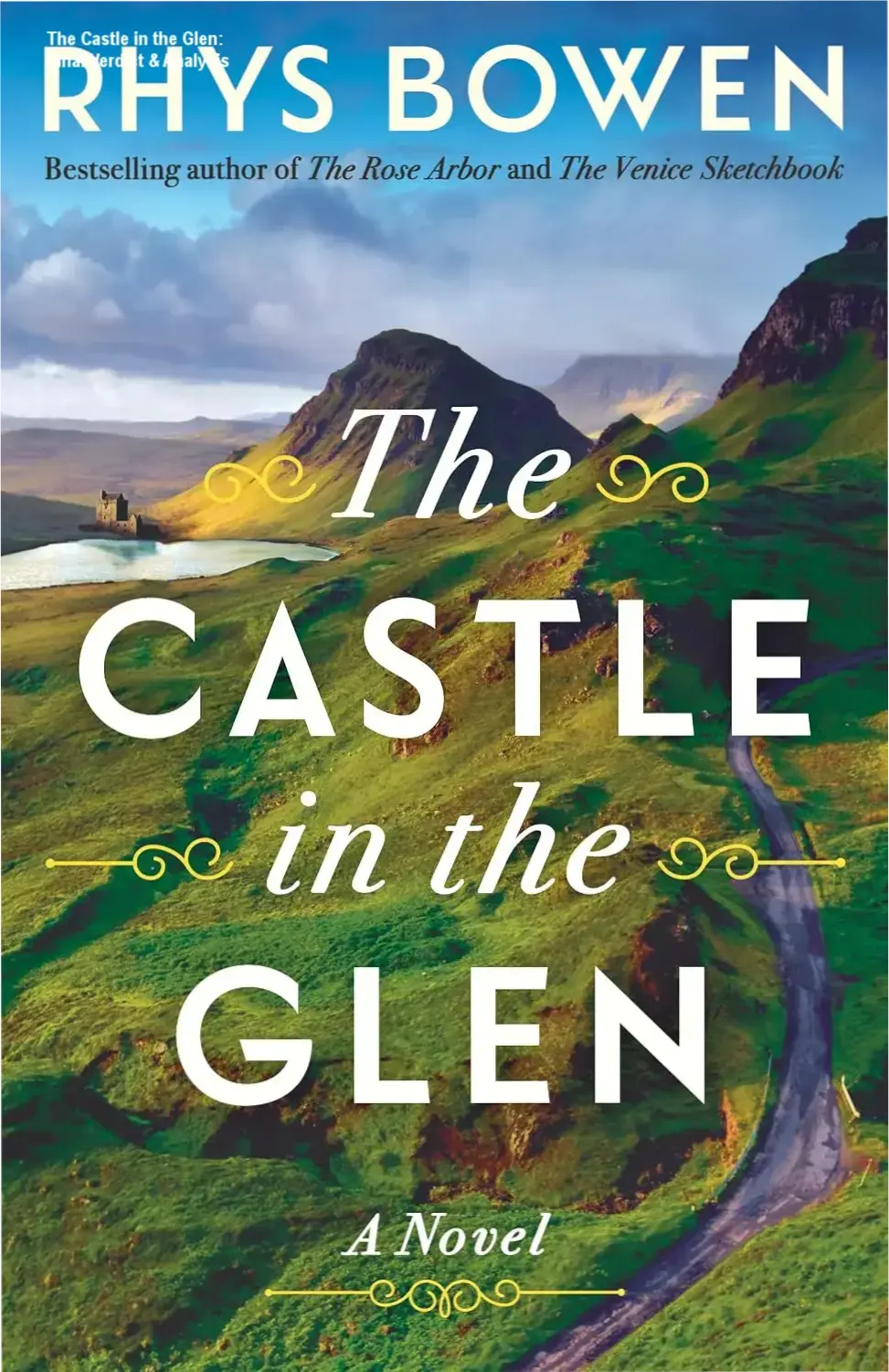
Rhys Bowen taps into this psychological itch with “The Castle in the Glen,” positioning it not just as a whodunit, but as a meta-narrative about the act of storytelling itself. If you are wondering whether this latest bestseller actually delivers on the atmospheric promise of the Scottish Highlands, you can check the current reader reception and availability here before diving into the depths of the Isle of Skye.
Ready to dive into “The Castle in the Glen”?
Explore available editions, check current live pricing, or download a free sample directly on Amazon.
*You will be redirected to Amazon. As an Amazon Associate, we may earn from qualifying purchases.
Narrative Layering: The Story Within a Story
Bowen doesn’t just give us a mystery; she gives us a Russian nesting doll of narratives. We start with Emma Callander, a ghostwriter in 1965, who is tasked with finishing a book for Iris Blackburn. Then we move into the “fiction” Iris is writing, which eventually reveals itself to be a cold case from 1904.
This structure is a double-edged sword. On one hand, it creates a sophisticated intellectual puzzle. On the other, it risks slowing the momentum. However, the transition from “writing a book” to “solving a crime” is handled with a precision that keeps the reader anchored.
The brilliance here lies in the tension. Emma isn’t just researching a plot; she is inadvertently trespassing into the private trauma of a living aristocratic family. The stakes shift from professional success to personal danger quite seamlessly.
Atmospheric Immersion and Pacing
The Isle of Skye is not merely a setting; it functions as a character. Bowen describes the misty Highlands and the medieval castle with a tactile quality that makes the damp air feel almost tangible. This “atmospheric weight” is essential for the amateur sleuth genre.
Regarding pacing, the novel clocks in at 424 pages. For a cozy mystery, that is a significant commitment. The first third is a slow burn, focusing on the relationship between Emma and the fading Iris. Some readers on Goodreads have noted that the setup takes a while to ignite.
But once the “Wild Girl” mystery of 1904 takes center stage, the pace accelerates. The contrast between the 1960s social dynamics and the rigid Edwardian constraints of 1904 provides a rhythmic variety that prevents the middle section from sagging.
Technical Feature
Analytical Verdict
Plot Complexity
High. Multi-generational timelines require active reading.
Setting Detail
Exceptional. Strong sense of place and historical texture.
Who This Book Is Actually For
The Castle in the Glen isn’t for the reader seeking a high-octane, blood-soaked thriller. It’s a “cozy” mystery in the truest sense, designed for those who enjoy the slow unraveling of family secrets and the atmosphere of the Scottish Highlands.
You will likely appreciate this if you enjoy:
Dual-layer narratives: The interplay between the 1965 ghostwriting plot and the 1904 cold case.
Atmospheric settings: The misty Isle of Skye and medieval architecture are almost characters themselves.
Character-driven mysteries: Where the “who” is interesting, but the “why” (the family trauma) is the real draw.
Who Should Probably Skip It
Avoid this title if you have a low tolerance for “slow-burn” pacing. If your ideal mystery is a fast-paced police procedural with forensic evidence and rapid-fire plot twists every ten pages, Bowen’s approach will feel too leisurely.
Similarly, if you are tired of the “amateur sleuth” trope—where a non-professional manages to uncover secrets that have stumped authorities for decades—this narrative will feel predictable.
Value Analysis: Is It Worth the Read?
At 424 pages, this is a substantial commitment. The value here isn’t in a shocking “gotcha” ending, but in the immersive experience. It functions more as a literary escape than a puzzle to be solved.
Common Purchasing Misstep: Some readers buy this expecting a historical non-fiction account of Scottish crime. It is a novel. While it captures the period well, it prioritizes romance and mystery over academic historical accuracy.
Editorial Verdict
Rhys Bowen delivers a polished, comforting mystery that leans heavily on its setting to maintain momentum. While the plot follows a familiar trajectory, the execution is professional and the chemistry between Emma and Tony adds a necessary layer of warmth to the cold-case investigation.
It is a safe bet for fans of the genre, provided you enter with the expectation of a romanticized mystery rather than a gritty crime drama. For a closer look at how other readers rated the twists in this story, you can check the latest user reviews on Amazon.
Final Editorial Verdict
“The Castle in the Glen: A Novel” delivers on its core promise for its intended audience, offering compelling insights without fluff. As highlighted in our detailed edition breakdown, its practical depth and readability are its greatest strengths.
Na análise minuciosa do Não Descanse em Paz (Almas Errantes Livro 1), auditamos o impacto real de sua trama nas leituras semanais de quem busca algo além do romance “leve”. O e‑book surge como promessa de choque emocional, mas será que entrega a intensidade que a capa grita? Leitores cansados de clichês de “stalker romântico”…
Analisamos a infraestrutura do Clube do VS Premium, um ecossistema híbrido que combina a entrega de ativos de áudio (Multitracks) com a capacitação técnica em DAWs (Digital Audio Workstations). O foco aqui não é apenas “dar o playback”, mas automatizar a performance de palco. Tecnicamente, o produto resolve o gargalo da “dependência de músicos de…
Relacionamentos modernos se tornaram um campo minado de sinais ambíguos, “ghosting” e a exaustiva busca por reciprocidade. A maioria das pessoas não sofre por falta de amor, mas por aceitar migalhas afetivas de quem não tem a menor intenção de construir algo sólido. O mercado de autoajuda tenta resolver isso com teorias complexas, mas o…
O Curso de Libertação Completo, ministrado pelo Pastor Juliano Medeiros, surge como uma resposta estruturada para líderes e obreiros que enfrentam a complexidade de lidar com temas espirituais profundos sem um suporte teórico-prático sólido. Em um cenário onde o conhecimento muitas vezes é fragmentado ou puramente empírico, este treinamento oferece uma base teológica e prática…
O cenário financeiro brasileiro atual não é apenas um problema de matemática; é um problema de gestão de danos. Com juros compostos que trabalham contra o consumidor e uma cultura de crédito facilitado, o endividamento deixou de ser uma exceção para se tornar um estado permanente para milhões de famílias. Existe um abismo entre os…
Verity não é apenas um thriller psicológico; é um exercício de manipulação narrativa que coloca o leitor no papel de juiz. A obra resolve a monotonia dos suspenses previsíveis ao fundir a vida real com um manuscrito perturbador, questionando a natureza da verdade. Colleen Hoover, consagrada pelos romances dramáticos, rompe a bolha aqui. Ela entrega…