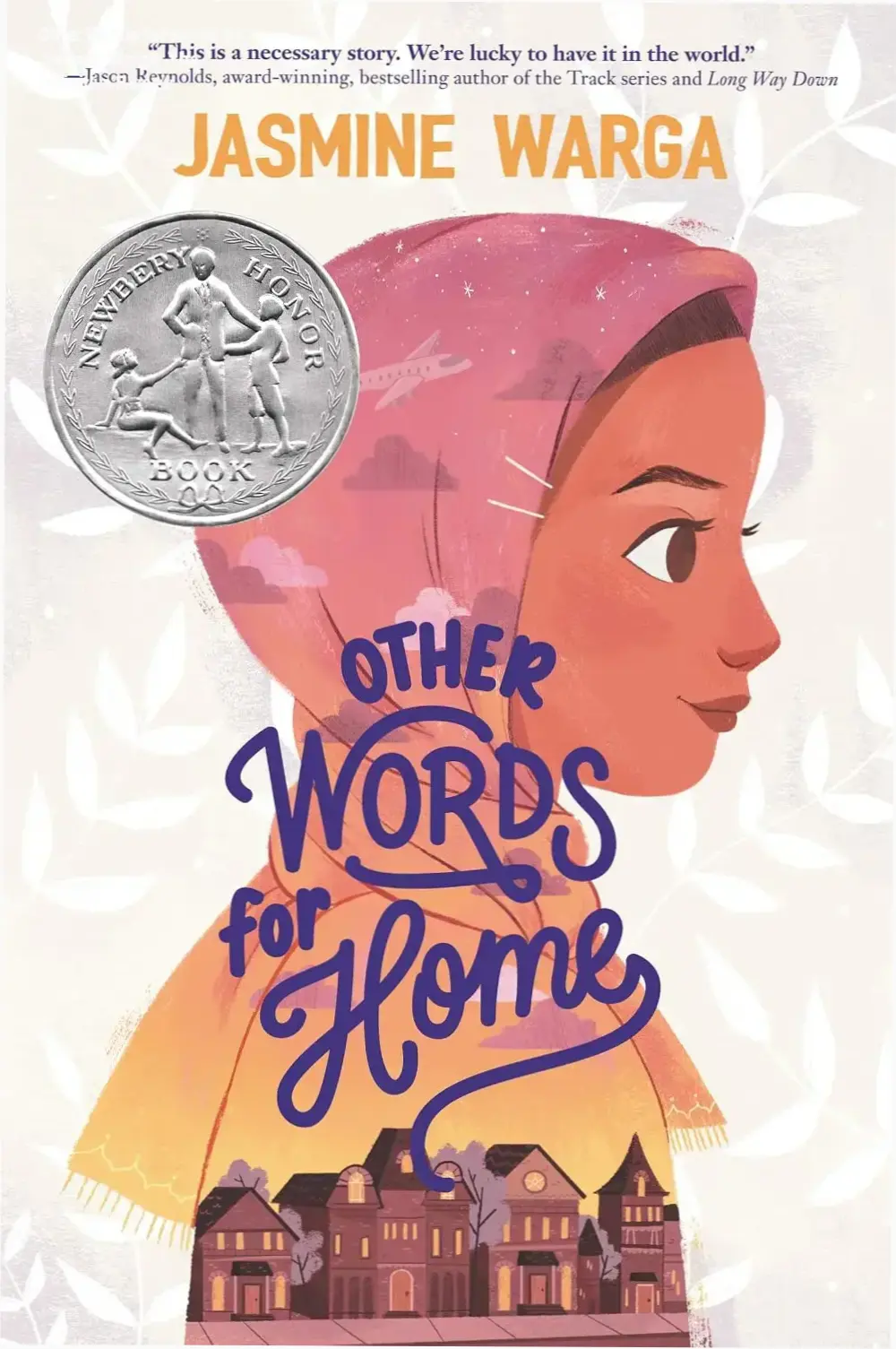
Other Words for Home by Jasmine Warga: The Definitive Review
Most people imagine immigration as a suitcase and a plane ticket. In reality, it is a violent fragmentation of identity. For a child, the trauma isn’t just the war they flee, but the sudden realization that they are now “the other” in a place that looks like a movie set but feels like a cage.
Readers often approach Newbery Honor books expecting a sanitized, moralistic lesson. However, the real value of Other Words for Home lies in its refusal to oversimplify the grief of leaving family behind. It tackles the friction between who we are and who the world decides we are based on a map.
Ready to dive into “Other Words for Home”?
Explore available editions, check current live pricing, or download a free sample directly on Amazon.
Preview Free Sample & Check Price on Amazon
*You will be redirected to Amazon. As an Amazon Associate, we may earn from qualifying purchases.
The Verse Gimmick: Literary Tool or Shortcut?
Let’s be skeptical for a moment. “Novels in verse” often feel like a shortcut to emotional depth, using white space to simulate profoundness. But Jasmine Warga uses this format as a precision instrument.
The verse doesn’t slow the story down; it accelerates the emotional delivery. By stripping away the fluff of traditional prose, the narrative mimics the fragmented nature of Jude’s new life.
The short lines mirror the hesitation of a girl learning to navigate a foreign tongue and a foreign culture. It turns the reading experience into a series of breaths—some shallow, some deep.
“The American movies haven’t quite prepared her for starting school in the US—and her new label of ‘Middle Eastern’.”
This specific tension is where the book wins. It captures the exact moment a child realizes that their identity is no longer something they define, but something assigned to them by strangers.
Dual Perspectives on Home and Loss
The narrative structure is a tightrope walk between Syria and Cincinnati. Warga doesn’t just focus on the destination; she keeps the wound of the departure open.
The contrast is sharp. Syria is depicted through the lens of love and volatility, while America is presented as loud, fast, and confusing. This isn’t a “grass is greener” story.
It’s a study in adaptation. The book examines how Jude maintains a connection with her father and brother through letters, turning the act of writing into a survival mechanism.
Verified readers on Goodreads frequently mention that the emotional weight of these letters is what makes the book hit home, regardless of the reader’s own nationality.
| Feature | Technical Detail |
|---|---|
| Format | Novel in Verse (Poetic Narrative) |
| Target Age | 9 – 12 Years (Grade 3-7) |
| Core Theme | Immigration, Identity, Family Separation |
| Length | 341 Pages (Fast-paced due to verse) |
The “Middle Eastern” Label: A Social Analysis
The book excels in showing the transition from being “just Jude” to being “the Middle Eastern girl.” This is a critical psychological pivot for middle-grade readers.
Who Should Actually Read This Book?
This isn’t a standard narrative. Because it’s a novel in verse, it appeals to a specific psychological profile: readers who prefer emotional resonance and white space over dense, descriptive prose.
The ideal reader:
- Parents and educators looking for a gateway to discuss immigration and empathy with children (ages 9-12).
- Readers who enjoy “lyrical” storytelling where the silence between the lines says as much as the words.
- Anyone who appreciates a character-driven arc focusing on identity and the “outsider” experience.
Who Should Skip It?
If you are looking for a detailed political analysis of the Syrian conflict or a fast-paced, plot-heavy thriller, skip this. This is a slow-burn emotional journey.
Additionally, some readers find the verse format frustrating. If you prefer traditional chapters with immersive, long-form descriptions, the fragmented nature of poetry might feel like “missing” information rather than a stylistic choice.
Value Analysis: Is It Worth the Investment?
From a technical standpoint, you are paying for a 341-page book, but because of the verse layout, the actual word count is lower than a standard novel. You aren’t paying for “filler,” but for the precision of the language.
The value lies in its pedagogical utility. It transforms a complex global crisis into a digestible, human-centric story. For the price of a Kindle edition or paperback, the emotional ROI is high, especially for classrooms or family reading circles.
Common Purchasing Missteps
The most common mistake is buying this expecting a “manual” on immigration or a historical textbook. It is a work of fiction. While grounded in reality, its primary goal is emotional truth, not academic documentation.
Editorial Conclusion
Other Words for Home succeeds because it doesn’t try to over-explain the tragedy of war. Instead, it focuses on the quiet agony of longing and the awkwardness of assimilation. It is a lean, punchy, and heartbreakingly honest piece of literature that manages to be hopeful without being naive.
If you’re undecided, the best way to gauge if the verse style works for you is to check the user reviews and sample pages on Amazon.
Final Editorial Verdict
“Other Words for Home” delivers on its core promise for its intended audience, offering compelling insights without fluff. As highlighted in our detailed edition breakdown, its practical depth and readability are its greatest strengths.
We also recommend checking the official Kindle sample and reader ratings before making your final purchase decision.
*You will be redirected to Amazon. As an Amazon Associate, we earn from qualifying purchases.