What Moves the Dead: The Definitive Technical Evaluation
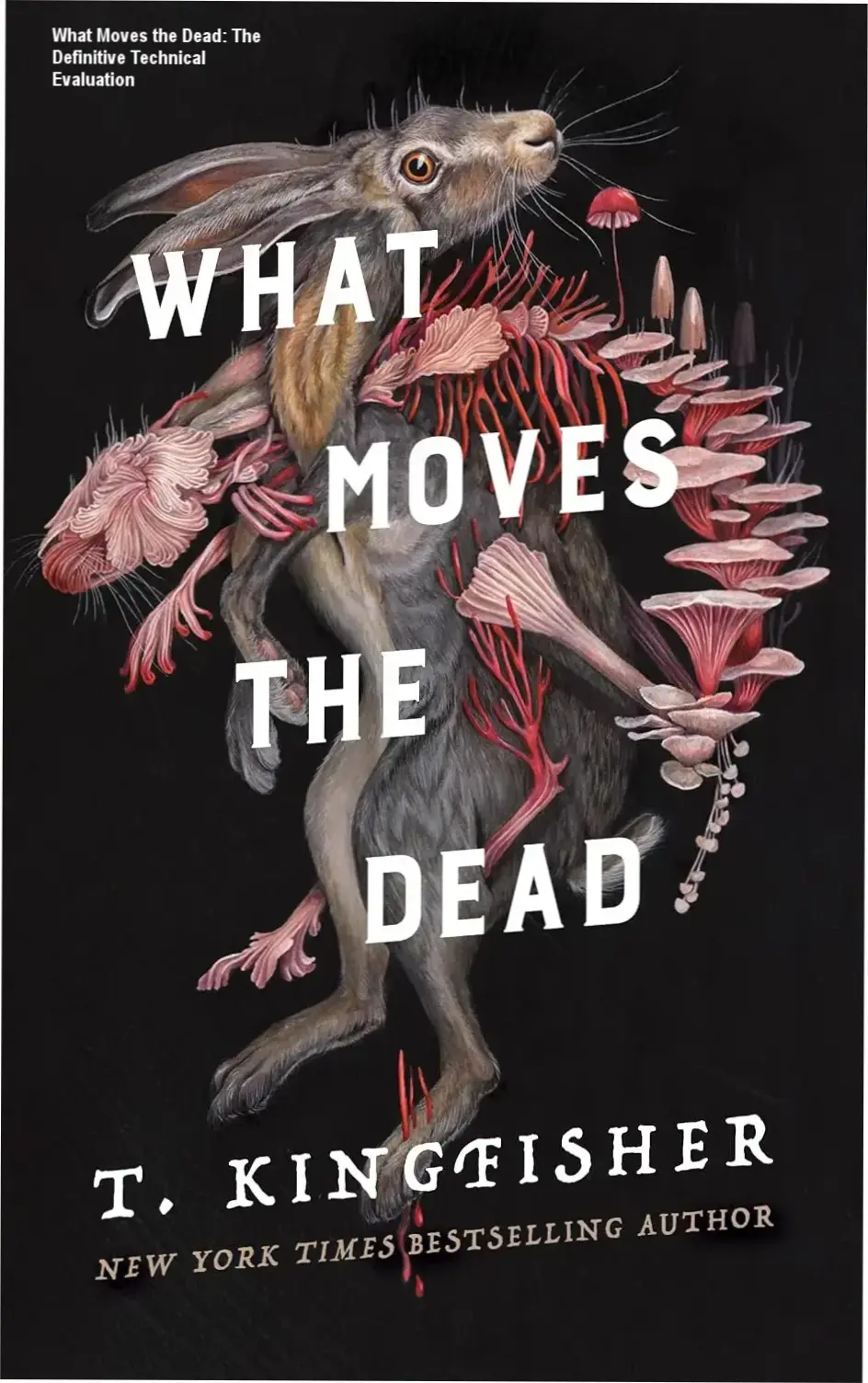
Most of us have a primal, instinctual fear of things that should stay dead but don’t. It is not just about ghosts or zombies; it is the visceral dread of nature reclaiming the human body in ways that defy logic. This “biological horror” is where T. Kingfisher operates best, blending clinical curiosity with genuine atmospheric terror.
When readers pick up a reimagining of Edgar Allan Poe, they usually expect a slow, brooding descent into madness. However, modern audiences crave a bit more agency and a faster pulse. You can check how this balance of classic gothic and modern pacing is received by other readers at this official listing before diving into the fungal depths of the House of Usher.
Ready to dive into “What Moves the Dead”?
Explore available editions, check current live pricing, or download a free sample directly on Amazon.
Preview Free Sample & Check Price on Amazon
*You will be redirected to Amazon. As an Amazon Associate, we may earn from qualifying purchases.
The “Dry Humor” Shield: Writing Style and Pacing
T. Kingfisher possesses a rare talent for writing characters who are profoundly exhausted. Alex Easton, our protagonist, is a retired soldier who approaches the supernatural with the skepticism of someone who has seen too many real-world disasters to be easily impressed.
This creates a brilliant narrative tension. The prose is lean, conversational, and laced with a dry, British-adjacent wit that prevents the story from sliding into melodrama. It doesn’t feel like a “haunted house” story; it feels like a forensic investigation into a nightmare.
The pacing is aggressive. At 163 pages, there is zero fluff. Kingfisher strips away the Victorian fluff of the original Poe story and replaces it with a ticking clock. The atmosphere is built through sensory details—the smell of damp earth, the sight of pulsing fungi—rather than vague adjectives.
“The horror is not in the ghost, but in the biology. It is the realization that the body is just a substrate for something else.”
Biology as the Villain: The Fungal Pivot
The most daring move in What Moves the Dead is the shift from the supernatural to the mycological. Instead of ancestral curses, we get fungal growths. It turns the House of Usher into a giant petri dish.
This pivot makes the horror far more effective for a modern reader. We live in an era of pandemics and ecological collapse; the idea of a spore-based infection that mimics consciousness is far more terrifying than a floating spirit.
The inclusion of a professional mycologist as a supporting character is a masterstroke. It grounds the horror in science, making the eventual descent into the “impossible” feel earned rather than forced. It transforms the story from a ghost tale into a biological thriller.
| Feature | Classic “House of Usher” | Kingfisher’s Version |
|---|---|---|
| Core Threat | Family Curse/Madness | Invasive Fungal Organism |
| Protagonist | Passive Observer | Active, Skeptical Soldier |
| Tone | Melancholic & Gloomy | Dry, Analytical & Dread-filled |
| Resolution | Inevitability/Collapse | Investigation/Survival |
Expectation vs. Reality: The “Novella” Trap
Many readers enter this book expecting a sprawling epic because of Kingfisher’s reputation in fantasy. The reality is a tight, claustrophobic novella. Some Goodreads reviewers complained that it ended too quickly, but as an analyst, I argue the opposite.
The brevity is the point. The story mirrors the infection it describes: it starts small, settles in, and then consumes everything rapidly. Expanding this to a 400-page novel would have diluted the tension and likely ruined the claustrophobia.
However, the “learning curve” here is emotional. If you are looking for a traditional romance or a high-action battle, you will be disappointed. This is a story of atmospheric decay and the quiet horror of watching a friend disappear while still standing in front of you.
Real-World Value: What This Book Actually Teaches
Beyond the scares, the book explores the burden of loyalty. Alex Easton returns to the Usher estate not out of curiosity, but out of a soldier’s sense of duty to a childhood friend. It asks a difficult question: at what point does loyalty become a suicide pact?
The narrative also touches on the fragility of the human mind. The “malady of the nerves” suffered by Roderick is treated not just as a plot point, but as a study in how environment shapes mental
Who Should Actually Read This?
This isn’t a book for everyone. If you are looking for a sprawling, 600-page epic fantasy with intricate world-building, you are in the wrong place. What Moves the Dead is a lean, atmospheric novella. It is a surgical strike of gothic horror.
The ideal reader fits one of these profiles:
- The Poe Enthusiast: Those who love “The Fall of the House of Usher” but want a version that replaces vague “gloom” with tangible, terrifying biological horror.
- The “Body Horror” Fan: If the idea of fungal networks infiltrating human consciousness doesn’t make you nauseous, you’ll love the visceral descriptions here.
- The Short-Attention-Span Reader: At 163 pages, it provides a complete narrative arc without the fluff often found in modern horror novels.
Who Should Skip It?
Avoid this book if you have a phobia of mushrooms or mold. T. Kingfisher doesn’t just mention fungi; she makes them a character. The “ick” factor is high.
Also, skip this if you expect a traditional “action-hero” story. While the protagonist is a retired soldier, the tension is psychological and atmospheric rather than a series of combat encounters. It is a slow burn that leads to a frantic conclusion.
Value Analysis: Is It Worth the Price?
From a purely technical standpoint, you are paying for a novella. Some readers might feel the price-to-page ratio is steep. However, the value here lies in the density of the prose.
Kingfisher strips away the filler. You get award-winning writing (Locus Award 2023) and a tightly wound plot. You aren’t paying for length; you are paying for a highly curated, atmospheric experience that doesn’t overstay its welcome.
Quick Verdict FAQ
| Common Question | Direct Answer |
|---|---|
| Is it a standalone? | Yes. While part of the “Sworn Soldier” series, it functions perfectly as a self-contained story. |
| How scary is it? | Moderate. It relies more on “dread” and “disgust” than jump scares. |
| Is it a faithful retelling? | It’s a reimagining. It keeps the soul of Poe’s work but adds a scientific, mycological twist. |
Editorial Conclusion
What Moves the Dead is a masterclass in atmospheric compression. It manages to evoke a sense of ancient, rotting decay while maintaining a brisk pace. It doesn’t try to be a magnum opus; it tries to be a nightmare, and it succeeds.
If you value tight plotting over sheer volume, this is a mandatory addition to your horror shelf. To see how other readers reacted to the fungal twists or to check for current Kindle discounts, visit the official product page.
Final Editorial Verdict
“What Moves the Dead” delivers on its core promise for its intended audience, offering compelling insights without fluff. As highlighted in our detailed edition breakdown, its practical depth and readability are its greatest strengths.
We also recommend checking the official Kindle sample and reader ratings before making your final purchase decision.
*You will be redirected to Amazon. As an Amazon Associate, we earn from qualifying purchases.