
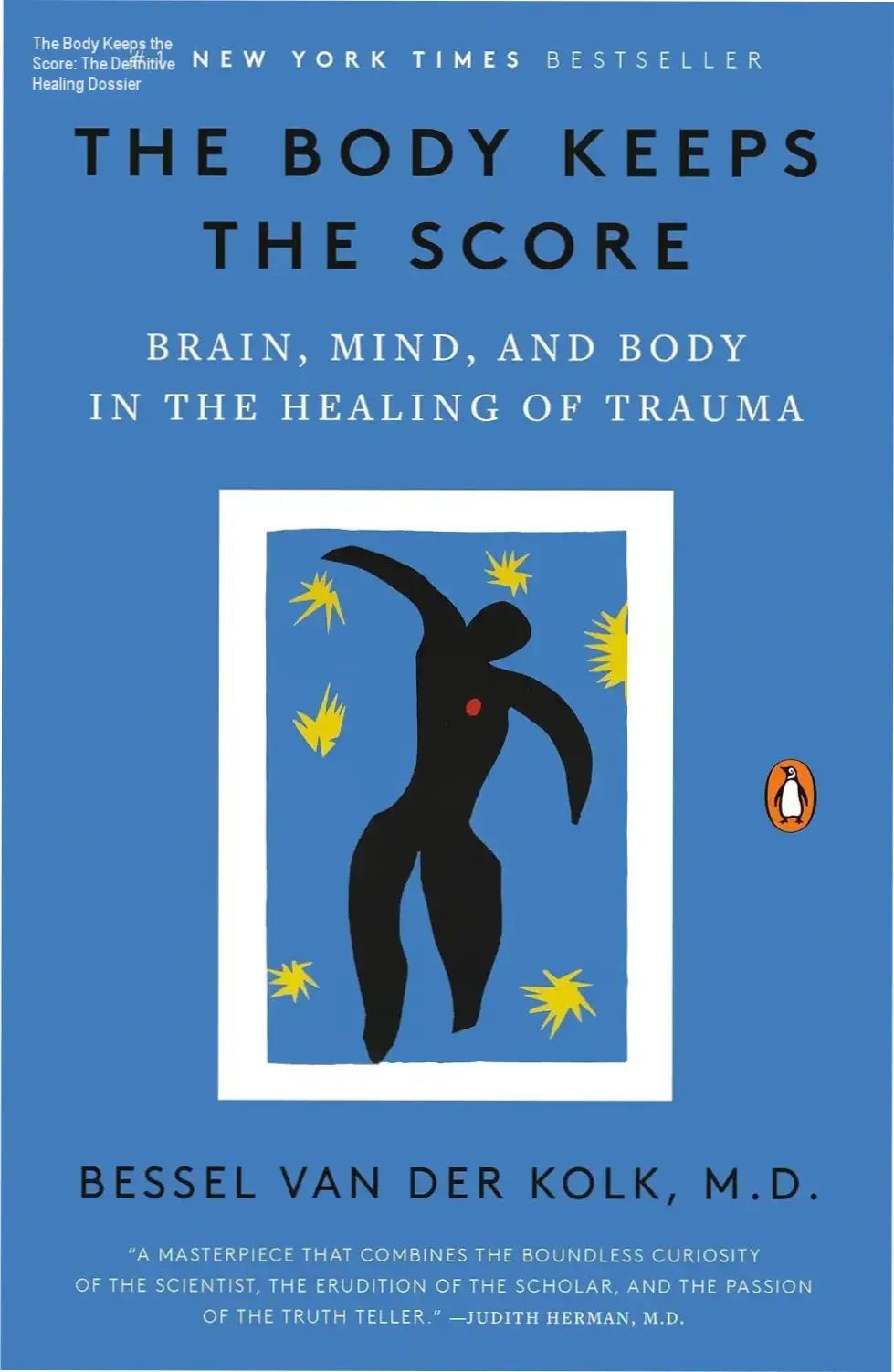
The Body Keeps the Score: The Definitive Healing Dossier
Most people treat emotional trauma like a bad memory—something that can be filed away or “talked through” until it stops hurting. But if you’ve ever felt a surge of panic from a smell or a sound without knowing why, you know that trauma isn’t just a story you tell; it’s a physical state your body refuses to forget.
Bessel van der Kolk’s work arrives as a necessary disruption to the traditional psychiatric model. Instead of focusing solely on the mind, he examines the biological imprint of stress, making this a pivotal read for those seeking an exit from chronic survival mode. You can check the current reader reception and availability on Amazon to see why it has become a modern manual for healing.
Ready to dive into “The Body Keeps the Score”?
Explore available editions, check current live pricing, or download a free sample directly on Amazon.
Preview Free Sample & Check Price on Amazon
*You will be redirected to Amazon. As an Amazon Associate, we may earn from qualifying purchases.
The Fallacy of “Talking It Out”
The central thesis of the book is a direct attack on the hegemony of talk therapy. Van der Kolk argues that when you are in a state of trauma, the “rational” part of your brain—the prefrontal cortex—effectively shuts down.
If the brain’s smoke detector (the amygdala) is screaming that you are in danger, no amount of logical conversation can convince your body that it is safe. You cannot talk your way out of a physiological panic response.
This is where the book gains its power. It validates the frustration of thousands of patients who felt “broken” because traditional therapy didn’t work. The problem wasn’t the patient; it was the tool.
“Trauma results in a profound loss of capacity for pleasure, engagement, self-control, and trust.”
The Biological Blueprint: Brain vs. Body
Van der Kolk doesn’t just speculate; he uses neurobiology to map the damage. He explains how trauma reshapes the brain, creating a permanent state of hyper-vigilance.
The body becomes a recording device. Muscle tension, digestive issues, and chronic fatigue aren’t just side effects—they are the trauma manifesting in the flesh.
The technical depth here is significant. He explores how the thalamus fails to integrate sensory input, leaving the survivor with fragmented, visceral “flashbacks” rather than a cohesive narrative memory.
| Feature | Traditional View | Van der Kolk’s View |
|---|---|---|
| Trauma Location | Stored in the mind/memory | Stored in the nervous system/body |
| Primary Treatment | Cognitive Behavioral Therapy (CBT) | Bottom-up (Body-to-Brain) approach |
| Goal of Recovery | Understanding the “Why” | Regulating the “How” (Physical State) |
The Recovery Toolkit: Beyond the Couch
The most practical value of the book lies in its “Bottom-Up” approach. Since the body holds the trauma, the body must be the gateway to the cure.
He explores a variety of non-traditional interventions. He doesn’t just suggest “exercise”; he analyzes why specific movements like Yoga or Tai Chi help the patient reclaim their sense of agency over their physical self.
EMDR (Eye Movement Desensitization and Reprocessing) and Neurofeedback are presented as high-tech ways to “reprogram” the brain’s response to triggers.
Skeptics might find the inclusion of drama therapy or sports a bit “soft,” but the data provided shows a clear link between rhythmic movement and the calming of the brain stem.
Pacing and Readability: A Clinical Struggle
Let’s be honest: the book isn’t a breezy read. It’s 464 pages of dense clinical observation mixed with heartbreaking case studies.
The pacing is uneven. You’ll find yourself captivated by a patient’s story, only to be hit with three pages of complex neurological jargon that requires a second read to fully grasp.
However, this friction is part of the experience. The complexity of the science mirrors the complexity of the trauma. It forces the reader to slow down and actually process the information.
Expectation vs. Reality: The Community Verdict
Across Reddit and Goodreads, the consensus is polarizing but generally positive. Many describe the book as “life-changing” or “the first time I felt seen.”
The common criticism? Some readers feel the book spends too much time on the “problem” and not enough on the “solution.” The latter half provides tools, but it doesn’t offer a step-by
Who This Book Is Actually For
This isn’t a light beach read. It is a dense, scientific, yet deeply human exploration of how the brain and body react to extreme stress. You will find immense value here if you fall into these categories:
- The “stuck” survivor: Those who have tried traditional talk therapy but feel their physical anxiety or triggers remain unchanged.
- Mental health practitioners: Clinicians looking to integrate somatic (body-based) approaches into their practice.
- The analytically curious: People who want to understand the biological “why” behind emotional dysregulation.
Who Should Skip This Book
Be honest with your expectations before buying. You should probably pass on this if:
- You want a “Quick Fix” manual: This is not a “10 steps to heal your trauma” guide. It’s a paradigm shift, not a checklist.
- You are sensitive to clinical case studies: Van der Kolk uses real-world examples that can be visceral and triggering for some readers.
- You prefer purely academic textbooks: While scientific, the tone is narrative and observational, not a dry peer-reviewed journal.
Value Analysis: Investment vs. Reward
At over 460 pages, the “cost” here is primarily your time and emotional energy. However, the ROI is high because it dismantles the myth that trauma is “all in your head.”
The common purchasing mistake is treating this as a self-help book. It is more of a foundational map. It tells you where you are and why you are there, but it expects you to do the heavy lifting of finding the right therapist or modality (yoga, EMDR, neurofeedback) to actually move forward.
Editorial Verdict: The Bottom Line
The book succeeds because it bridges the gap between neurology and lived experience. It doesn’t promise a miracle cure, but it provides the scientific validation that many survivors have spent a lifetime seeking.
If you are tired of being told to “just move on” and want to understand why your body reacts to triggers before your mind even realizes what’s happening, this is the definitive resource. You can verify the latest reader ratings and current pricing here to see if it aligns with your needs.
Final Editorial Verdict
“The Body Keeps the Score” delivers on its core promise for its intended audience, offering compelling insights without fluff. As highlighted in our detailed edition breakdown, its practical depth and readability are its greatest strengths.
We also recommend checking the official Kindle sample and reader ratings before making your final purchase decision.
*You will be redirected to Amazon. As an Amazon Associate, we earn from qualifying purchases.