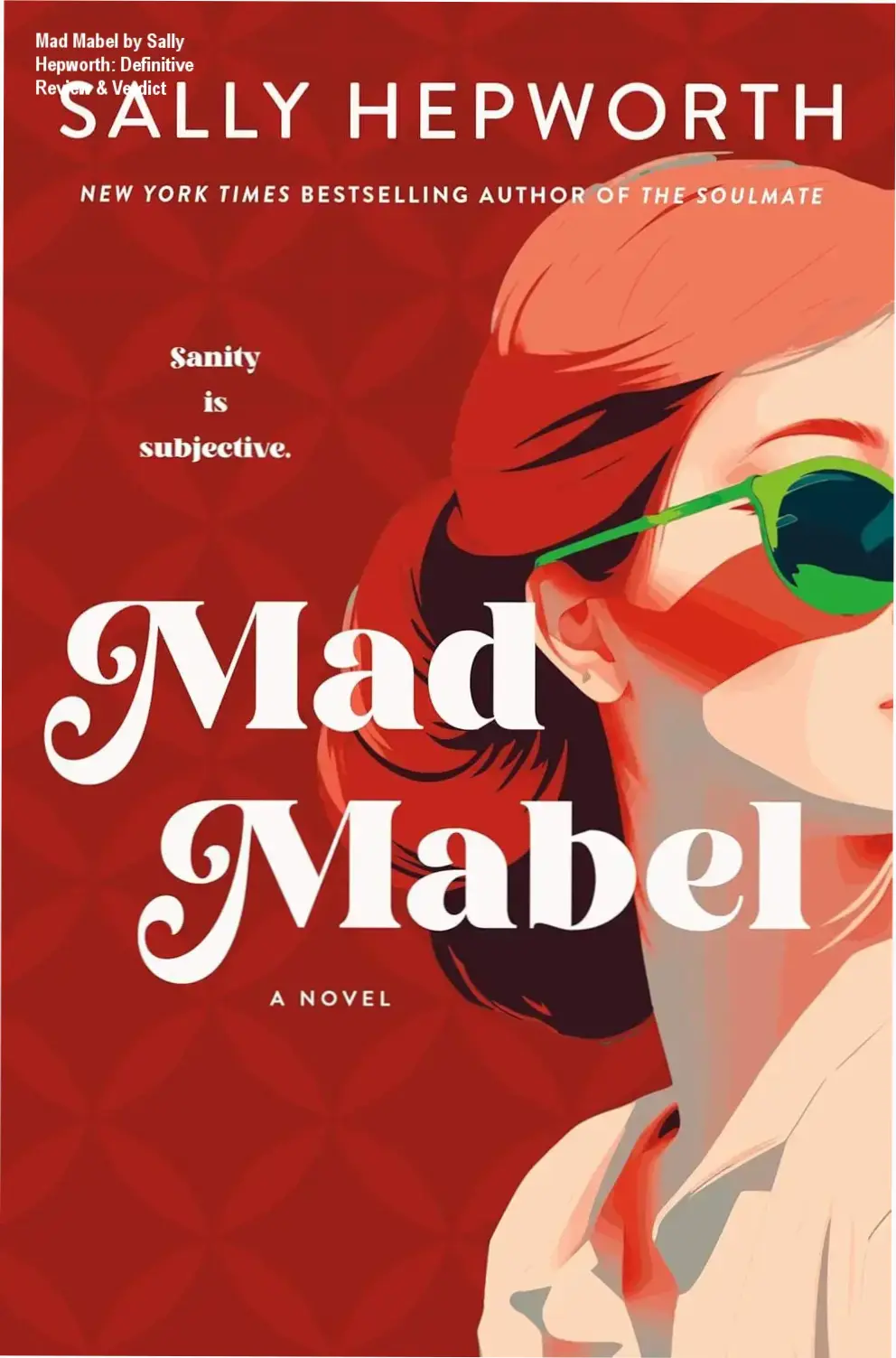
Mad Mabel by Sally Hepworth: Definitive Review & Verdict
We spend a lifetime building versions of ourselves that the world finds palatable, only to realize in the quiet of later years that the most interesting chapters are the ones we hid. The cultural obsession with the “unreliable narrator” usually centers on youth, addiction, or psychological breaks, but Sally Hepworth flips the script by anchoring her chaos in an eighty-one-year-old woman with arthritis and a tea addiction. It is a brilliant subversion: the person society deems most harmless holds the darkest resume. If you have ever felt underestimated because of your age, your gender, or just your zip code, this premise hits a nerve before you even crack the spine.
Hepworth has carved a niche for domestic suspense that feels less like a puzzle box and more like a family argument recorded in high definition. Mad Mabel arrives with the weight of an instant New York Times bestseller and over thirty-three thousand Amazon ratings averaging 4.6 stars. That volume of consensus usually signals a crowd-pleaser, but the “Mad Mabel” moniker suggests something sharper than standard book club fare. The question isn’t just whodunit; it’s whether a woman labeled a monster at sixteen can ever be seen as a human at eighty-one.
Ready to dive into “Mad Mabel”?
Explore available editions, check current live pricing, or download a free sample directly on Amazon.
Preview Free Sample & Check Price on Amazon
*You will be redirected to Amazon. As an Amazon Associate, we may earn from qualifying purchases.
The Voice: Grumpiness as a Survival Mechanism
Elsie Fitzpatrick is not “likable” in the way publishing marketing departments usually demand. She is prickly, judgmental, and weaponizes her invisibility like a shield. That is exactly why she works. Hepworth refuses to soften her edges for the reader’s comfort. The first-person chapters from Elsie’s perspective are masterclasses in voice—dry, weary, but pulsing with a ferocious intelligence that refused to die in prison.
Readers on Goodreads frequently cite the “cantankerous old lady” trope as a highlight, but they miss the nuance if they stop there. Her grumpiness isn’t a personality quirk; it’s scar tissue. Every cutting remark about her neighbor Joan or the police is a defense mechanism honed over decades. When seven-year-old Persephone crashes through her defenses with stickers and zero boundaries, it doesn’t feel like a cheap “grumpy/sunshine” pivot. It feels like a siege. The child sees the person, not the headline. That dynamic carries the emotional weight of the novel.
The contrast between internal monologue and external presentation is where the writing shines. Elsie thinks in complex legal strategies and historical context; the world sees a doddering pensioner. That gap creates a dramatic irony that sustains the 348 pages without needing a cliffhanger every chapter. It is a character study disguised as a thriller.
Dual Timelines: The Architecture of a Frame-Up
The narrative splits between 1959 (Mabel Waller) and 2024 (Elsie Fitzpatrick). This isn’t just structural decoration. The past timeline answers the “what happened,” but the present timeline answers the “who cares.” Hepworth uses the 1959 sections to dismantle the “Mad Mabel” mythology in real-time. We see the coercion, the media frenzy, and the legal railroading of a teenage girl who didn’t fit the victim mold.
Pacing in the historical sections is deliberate. It has to be. The court transcripts and newspaper clippings (simulated within the prose) slow the reader down, forcing a confrontation with the misogyny of the era. The modern timeline moves faster, driven by the neighbor’s death and the media circus returning like vultures. The convergence is handled cleanly—no cheap “it was me all along” twists, just a slow bleed of truth.
Some Amazon reviewers found the 1959 sections “slower.” That is a feature, not a bug. The slowness mimics the bureaucratic inertia that crushed Mabel. If you want a pure page-turner, the middle third might test you. If you want to understand *why* Elsie is Elsie, it is essential architecture.
Themes: Invisibility, Media Trials, and the Cost of Silence
The book operates on three distinct thematic engines. First, the weaponization of female invisibility. Elsie survives because the world stops looking at old women. She uses that blindness to investigate a murder the police have already “solved” via prejudice. Second, the media as a judicial actor. The 1959 press didn’t just report on Mabel; they convicted her. The 2024 podcasters and influencers do the same to Elsie. Hepworth draws a straight line from tabloid headlines to true-crime TikTok. It is uncomfortable because it is accurate.
Third, the taxonomy of motherhood. Mabel loses a child. Elsie chooses not to have them. Joan (the neighbor) smothers hers. Persephone lacks one. The novel argues that society’s definition of “good mother” is a trap designed to fail women regardless of which side of the line they fall on. This is where the book transcends genre. It stops being a mystery about a dead neighbor and becomes a thesis on female autonomy.
“They called me mad because I wouldn’t break. They called me a murderer because it was easier than admitting they failed a child. I became the story they needed so they could sleep at night.”
That sentiment—paraphrased from Elsie’s internal monologue—encapsulates the book’s thesis. The “Mad” label was never a diagnosis; it was a filing cabinet for societal inconvenience.
Reader Reception: The “Cozy” Mislabeling Problem
Scan the 4.4 Goodreads average (190k+ ratings) and a pattern emerges
Who Should Read This (And Who Should Skip)
If you enjoy character-driven mysteries where the protagonist’s voice carries the narrative, this is a strong pick. Elsie is a masterclass in the “unreliable narrator who is actually deeply reliable” archetype—gritty, funny, and surprisingly tender. Readers who loved The Thursday Murder Club or A Man Called Ove will feel right at home here. The intergenerational dynamic with seven-year-old Persephone provides genuine levity without feeling saccharine.
However, skip this if you demand a police procedural with strict forensic accuracy. The investigation serves the character study, not the other way around. The pacing is deliberate; the first act builds atmosphere over plot momentum. If you need high-stakes action from page one, the slow burn will frustrate you.
Value Proposition: Hardcover vs. Kindle vs. Audio
At 348 pages, the Kindle edition ($14.99 list) offers solid entertainment-per-dollar value. The prose is clean, dialogue-heavy, and formats perfectly on e-ink. The audiobook, narrated with an authentic Australian lilt, adds significant texture to Elsie’s voice—worth the credit if you commute. The hardcover is a quality physical object (St. Martin’s Press does good paper stock), but the story doesn’t demand a permanent shelf spot unless you’re a Hepworth completist.
Common Missteps & Expectation Calibration
- Expecting a “cozy mystery”: It’s cozy-adjacent but darker. Past trauma (institutional abuse, wrongful conviction) is central, not background flavor.
- Wanting a twist-a-chapter thriller: The “twist” is emotional, not mechanical. The resolution prioritizes thematic closure over shock value.
- Disliking child POVs: Persephone gets significant page time. Her voice is well-rendered but polarizing for readers who find child narrators grating.
Quick Contextual FAQ
Is this a standalone? Yes. No prior Hepworth knowledge required.
How “Australian” is it? Very. Slang, setting (Melbourne suburbs), and cultural references (historical legal context) are integral. A glossary isn’t provided, but context clues suffice.
Trigger warnings? Historical child abuse, institutional neglect, and dementia depiction are handled directly but not gratuitously.
Ultimately, Mad Mabel succeeds because it refuses to let Elsie become a caricature. It’s a story about agency in old age and the stories we tell to survive. For the right reader, it’s a 4.5-star experience; for the wrong one, a 3-star slog. Check current pricing and reader sentiment here.
Final Editorial Verdict
“Mad Mabel” delivers on its core promise for its intended audience, offering compelling insights without fluff. As highlighted in our detailed edition breakdown, its practical depth and readability are its greatest strengths.
We also recommend checking the official Kindle sample and reader ratings before making your final purchase decision.
*You will be redirected to Amazon. As an Amazon Associate, we earn from qualifying purchases.