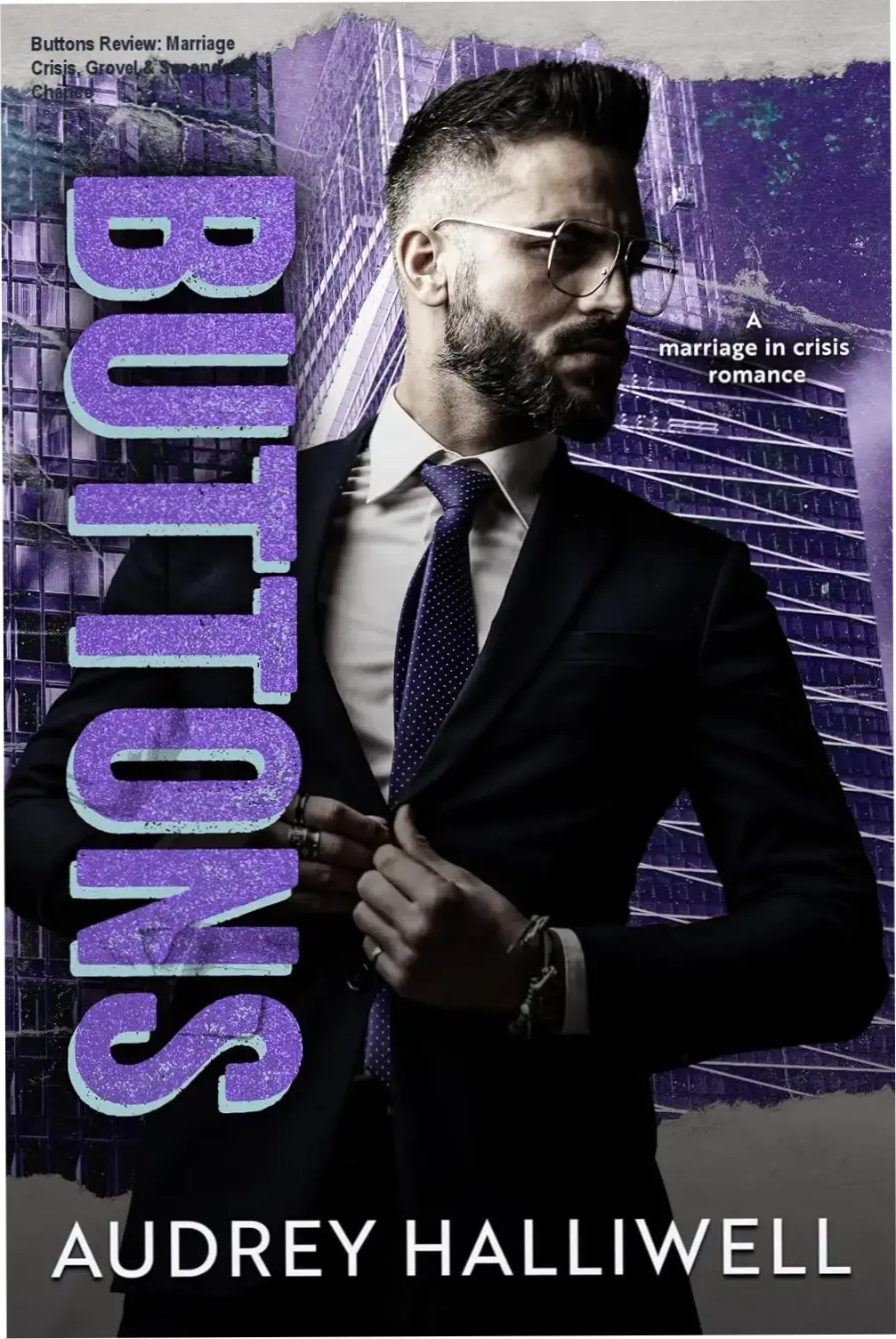
Buttons Review: Marriage Crisis, Grovel & Second Chance
The “list of flaws” trope is a minefield in romance. Usually, it signals a hero who needs a personality transplant, not just a grovel. Readers pick up a marriage-in-crisis novel expecting emotional devastation, but they often get a quick apology followed by instant forgiveness. Buttons by Audrey Halliwell walks into this trap knowingly. Julian Plaza didn’t just think bad thoughts; he documented them. He compared his wife Elowen to the “stunning” Carmella Ruiz and settled for “safe.” That word—safe—is the knife twist. It implies a transaction, not a union. If you have ever felt like the practical choice someone made while pining for the shiny option, this premise hits a nerve. The setup promises a long, ugly road to redemption, which is exactly what the genre needs right now. You can check the current reader reception and sample chapters here to see if the execution matches the brutal promise.
The marketing highlights a neurodivergent hero and middle-aged protagonists. That combination suggests a shift away from the “miscommunication via silence” trope toward “miscommunication via fundamentally different operating systems.” Julian’s logic-based decision making—making a list, categorizing a wife as an asset—reads less like malice and more like a profound failure of emotional intelligence. Elowen leaving to build a stray cat sanctuary isn’t just a cute backdrop; it’s a thematic mirror. She cares for the discarded, the flawed, the “button-nosed” strays. He discarded her for a flaw. The irony is deliberate. The question isn’t just *if* he grovels, but *if* he can rewire how he assigns value to human beings.
Ready to dive into “Buttons: A Wealthy CEO Marriage-in-Crisis Romance (Vows)”?
Explore available editions, check current live pricing, or download a free sample directly on Amazon.
Preview Free Sample & Check Price on Amazon
*You will be redirected to Amazon. As an Amazon Associate, we may earn from qualifying purchases.
The List as Character Architecture
The list is the engine. It’s not a plot device; it’s a character study.
Julian doesn’t cheat. The blurb screams “No cheating.” That is the safety net for the reader. But emotional betrayal often stings deeper. He reduced his wife to bullet points. “Button nose.” “Not stunning.” “Safe.”
Early Goodreads chatter focuses heavily on this specific scene. Readers report a visceral reaction to the “button nose” line. It’s specific. It’s petty. It feels real in a way “she wasn’t my type” never does. One reviewer noted: “It wasn’t the big things. It was the button nose. That specificity made me nauseous for her.”
Halliwell uses this to code Julian immediately. He isn’t a villain. He is a man who processes the world via categorization. The neurodivergent coding—confirmed in the marketing—reframes the list. It wasn’t cruelty. It was a pros/cons analysis for a merger. He lacked the software to understand that marriage isn’t a merger.
This distinction saves the redemption arc. If he were malicious, the grovel fails. If he is structurally incapable of seeing her humanity without a system crash, the rebuild becomes a technical manual for intimacy. That is a fresh angle.
Elowen’s Sanctuary: Agency Over Anger
She leaves. She takes the kids. She builds a cat sanctuary.
This is where the book dodges the “shrewish wife” trap. She doesn’t sit in the mansion screaming. She exits. She creates a space defined by compassion for the imperfect. Stray cats. Button noses. Flawed creatures worthy of care.
The sanctuary setting does heavy lifting. It externalizes her internal state. She is healing by fixing what the world threw away. It contrasts sharply with Julian’s sterile, high-value asset management world.
Amazon reviewers comparing this to the Vows series expectations note the maturity. “Finally, a heroine who doesn’t wait to be chased. She builds a life. He has to earn entry to it.”
The kids are not props. They are the stakes. A marriage-in-crisis with adult children (or teens) changes the texture. It’s not just about romantic love anymore. It’s about the family unit fracturing. Julian lost his wife *and* his daily access to his kids because he couldn’t mask his assessment of her face.
The Neurodivergent Lens: Feature, Not Bug
Marketing a hero as “neurodivergent” in a CEO romance is a risk. Often it’s used as an excuse for bad behavior. “He doesn’t get feelings.” Halliwell appears to use it as a structural constraint.
Julian’s “logic” is the antagonist
Who This Book Is Actually For
Buttons isn’t your typical “billionaire saves the day” fantasy. It is a study in emotional wreckage and slow-burn redemption. This book is tailor-made for readers who prioritize the “grovel”—the specific satisfaction of seeing a powerful man realize he was the villain in his own marriage.
You will likely enjoy this if you appreciate:
- Complex Power Dynamics: The shift from the CEO’s control to Elowen’s independence.
- Neurodivergent Representation: A hero whose brain works differently, adding a layer of nuance to his social failures.
- Mature Themes: Middle-aged characters dealing with children and long-term resentment rather than college-age angst.
- The “Found Family” Aesthetic: The transition from a cold mansion to a stray cat sanctuary.
Who Should Probably Skip It
If you are looking for a “fluff” read or a fast-paced rom-com, steer clear. This is a marriage-in-crisis narrative. It deals with the brutal psychological impact of being told you are “safe” but not “stunning.”
Skip this book if:
- You cannot tolerate a male lead who starts the story as emotionally stunted or cruel.
- You prefer instant forgiveness over a long, arduous redemption arc.
- You are looking for high-heat scenes that outweigh the plot; the emotional tension here is the primary driver.
Value for Money & Realistic Expectations
At 366 pages, the pacing is designed for emotional immersion, not a quick sprint. A common mistake readers make with this genre is expecting a “quick fix” manual on marriage. This is a narrative about deconstruction.
The value lies in the psychological payoff. The transition from Julian’s “logical list” of flaws to his realization of Elowen’s worth is where the investment pays off. You aren’t paying for a plot twist; you are paying for the catharsis of a well-executed second chance.
Editorial Verdict
Audrey Halliwell successfully avoids the “perfect husband” trope, opting instead for a flawed, neurodivergent lead who has to actually work for his redemption. While the betrayal is sharp, the resolution feels earned rather than forced.
For those who love seeing a CEO brought to his knees by the very person he underestimated, this is a high-yield read. We recommend checking the latest reader reviews and current Kindle pricing to see if it fits your current mood.
Final Editorial Verdict
“Buttons” delivers on its core promise for its intended audience, offering compelling insights without fluff. As highlighted in our detailed edition breakdown, its practical depth and readability are its greatest strengths.
We also recommend checking the official Kindle sample and reader ratings before making your final purchase decision.
*You will be redirected to Amazon. As an Amazon Associate, we earn from qualifying purchases.