Crown Me Dead Review: Definitive Analysis of the Dark Romantasy Hit
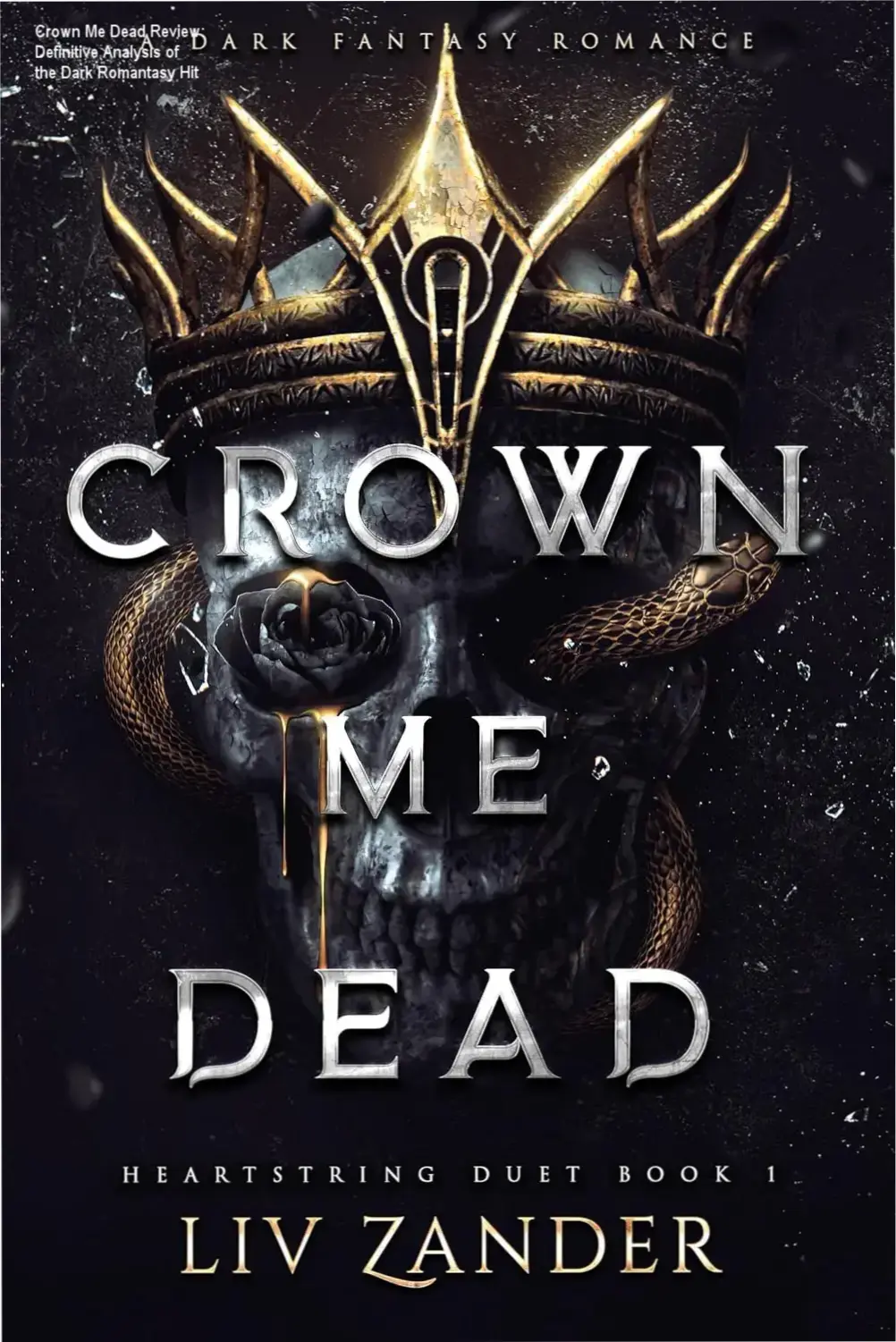
The “dark romantasy” shelf is currently drowning in books that mistake trauma for depth and abuse for tension, leaving readers exhausted by protagonists who confuse Stockholm syndrome with a character arc. We pick up these doorstoppers hoping for a villain who actually feels dangerous, a heroine who survives on grit rather than plot armor, and a romance that burns because the stakes are existential, not just hormonal. Most of the time, we get a misunderstood duke with a tragic backstory and a spicy scene count that substitutes for plot. Crown Me Dead arrived with a “villains do it better” disclaimer and a gravedigger premise that promised something sharper, dirtier, and far more honest about the cost of power.
The market hype was deafening—#1 Bestseller in Grief Fiction, tens of thousands of ratings averaging 4.3 stars—but hype is often just noise amplified by BookTok algorithms chasing the next “spicy” trend. The real question wasn’t if the spice level delivered; it was whether Liv Zander could sustain a narrative where the love interests are genuinely monstrous, the world-building doesn’t collapse under its own “rotting realm” metaphor, and the heroine’s agency survives a bargain that literally requires her suicide. The premise—seduce the King, become Queen, die—is a high-wire act. Fall off, and it’s just another “chosen one” fantasy with better marketing. Stick the landing, and it redefines what a “dark romance” protagonist is allowed to look like.
Ready to dive into “Crown Me Dead”?
Explore available editions, check current live pricing, or download a free sample directly on Amazon.
Preview Free Sample & Check Price on Amazon
*You will be redirected to Amazon. As an Amazon Associate, we may earn from qualifying purchases.
The Gravedigger’s Gaze: Voice, Pacing, and the Anti-Heroine
Zander writes prose that bleeds. That sounds like a cliché until you hit page three and realize the metaphorical language isn’t decoration—it’s the protagonist’s operating system. Elara doesn’t see the world; she dissects it. She catalogs rot, measures decay, and prices the dirt. This voice does heavy lifting. It establishes the “grimdark” atmosphere instantly without needing paragraphs of exposition about the Blight or the Court. You feel the mud under your nails before you know the King’s name.
Pacing is brutal in the best way. The “bargain” drops in Chapter One. No 50-page preamble in the village. We are in the palace by the 15% mark. This respects the reader’s intelligence. The “seduce the King” mandate creates an immediate ticking clock. Every interaction with Kael is a move in a game where the penalty is death. But—and this is crucial—Elara is bad at the “seduction” part in the traditional sense. She is awkward, violent, and strategically honest. Readers on Goodreads and Reddit (r/FantasyRomance threads specifically) consistently highlight this: “She doesn’t simper, she schemes.” It subverts the “femme fatale” trope. She is a weapon pointed at herself, forced to point it outward.
The dual POV structure (Elara, Kael, Vale) is handled with surgical precision. Head-hopping is a cardinal sin in commercial fantasy, but Zander uses distinct voice markers. Kael’s chapters drip with ancient, weary arrogance masking a festering wound. Vale’s are cold, clinical, terrifyingly controlled. You always know whose head you’re in. This isn’t just style; it’s structural necessity. The mystery of *who* is the true threat requires distinct internal monologues that contradict each other externally.
“I don’t want a hero. I want a monster who loves me like I’m the only holy thing in a profane world.” — Paraphrased sentiment dominating Reddit discussion threads on the Heartstring Duet.
The Rotting Court: World-Building Through Visceral Decay
Fantasy worlds often suffer from “travel guide syndrome”—history, geography, magic systems dumped via dialogue. Zander builds the Kingdom of Rot through sensory horror. The Blight isn’t a background texture; it’s a character. It eats the stone, the food, the skin. The magic system (The Threads/Heartstrings) is revealed diegetically. We learn the rules when Elara learns them, or when Kael weaponizes them. There are no convenient info-dumps.
The “Heartstring” mechanic—literal threads connecting souls, visible only to some, manipulable by fewer—is the novel’s strongest high-concept hook. It transforms romance into tangible biology and politics. A severed thread isn’t heartbreak; it’s amputation. A tangled thread isn’t confusion; it’s a trap. This allows Zander to write “instalove” (or instalust/insta-obsession) without the usual eye-roll. The connection is *magically enforced* but *emotionally earned*. The tension sits in the gap: the magic says “mate,” the politics say “murder.”
However, the world-building has blind spots. The geopolitics outside the palace walls remain vague. Who are the neighbors? Why does the Blight stop at the border? The map is effectively “The Palace,” “The Graveyard,” and “The Dark.” For a duet, this tight focus works. For a sprawling series, it would fracture. As it stands, the claustrophobia serves the plot. The palace *is* the world.
| Element | Execution | Verdict |
|---|---|---|
| Prose Style | Visceral, metaphor-heavy, first-person present | Immersive; polarizing for literalists |
Magic SystemWho This Book Is For (And Who Should Skip It)This duet opener targets readers who prefer their romance soaked in blood, betrayal, and moral ambiguity. If you devoured The Serpent and the Wings of Night or A Court of Thorns and Roses but wished the villains got more page time—and the heroine didn’t need saving—this is your sweet spot. The “gravedigger’s daughter” archetype works because Elara possesses agency from page one; she calculates survival like a weapon, not a wish. Hard pass if you require a traditional hero arc, redemption-through-love tropes, or a clear moral compass. Kael and Vale are monsters. The narrative refuses to sanitize them. Readers sensitive to graphic violence, dubious consent dynamics, or “villain wins” endings will find the experience frustrating rather than thrilling. The “no hero” disclaimer in the blurb is literal marketing, not hyperbole. Value Proposition: Duet Pacing vs. Standalone SatisfactionAt 278 pages, the Kindle edition moves fast. The price point (frequently under $5 or free in KU) delivers high entertainment-per-dollar for dark romantasy fans. However, the cliffhanger is brutal. This is half a story, structurally speaking. Buying Book 1 without budgeting for Crown Me Yours immediately after is a purchasing error—you will need the resolution. The value calculation shifts entirely on whether you binge the pair. Common Buyer Missteps
Quick Contextual FAQIs it a true cliffhanger? Yes. The book ends mid-crisis. Resolution requires Book 2. How “dark” is dark? Think torture, cannibalism references, forced proximity with death threats, and a heroine who digs graves for a living. It earns the label. Audiobook narration? Dual POV narration exists and elevates the internal monologues significantly. Worth the credit if you prefer audio. Editorial Bottom LineCrown Me Dead succeeds because it commits fully to its premise: villains are more interesting when they don’t apologize. The writing is sharp, the world-building efficient, and the female lead competent. It’s a page-turner that respects the reader’s intelligence. If your TBR pile can handle a mandatory two-book commitment, grab the Kindle edition here and clear your weekend. Final Editorial Verdict“Crown Me Dead” delivers on its core promise for its intended audience, offering compelling insights without fluff. As highlighted in our detailed edition breakdown, its practical depth and readability are its greatest strengths. We also recommend checking the official Kindle sample and reader ratings before making your final purchase decision. *You will be redirected to Amazon. As an Amazon Associate, we earn from qualifying purchases. Posts Similares
|