West with Giraffes: Expert Analysis of Lynda Rutledge’s Bestseller
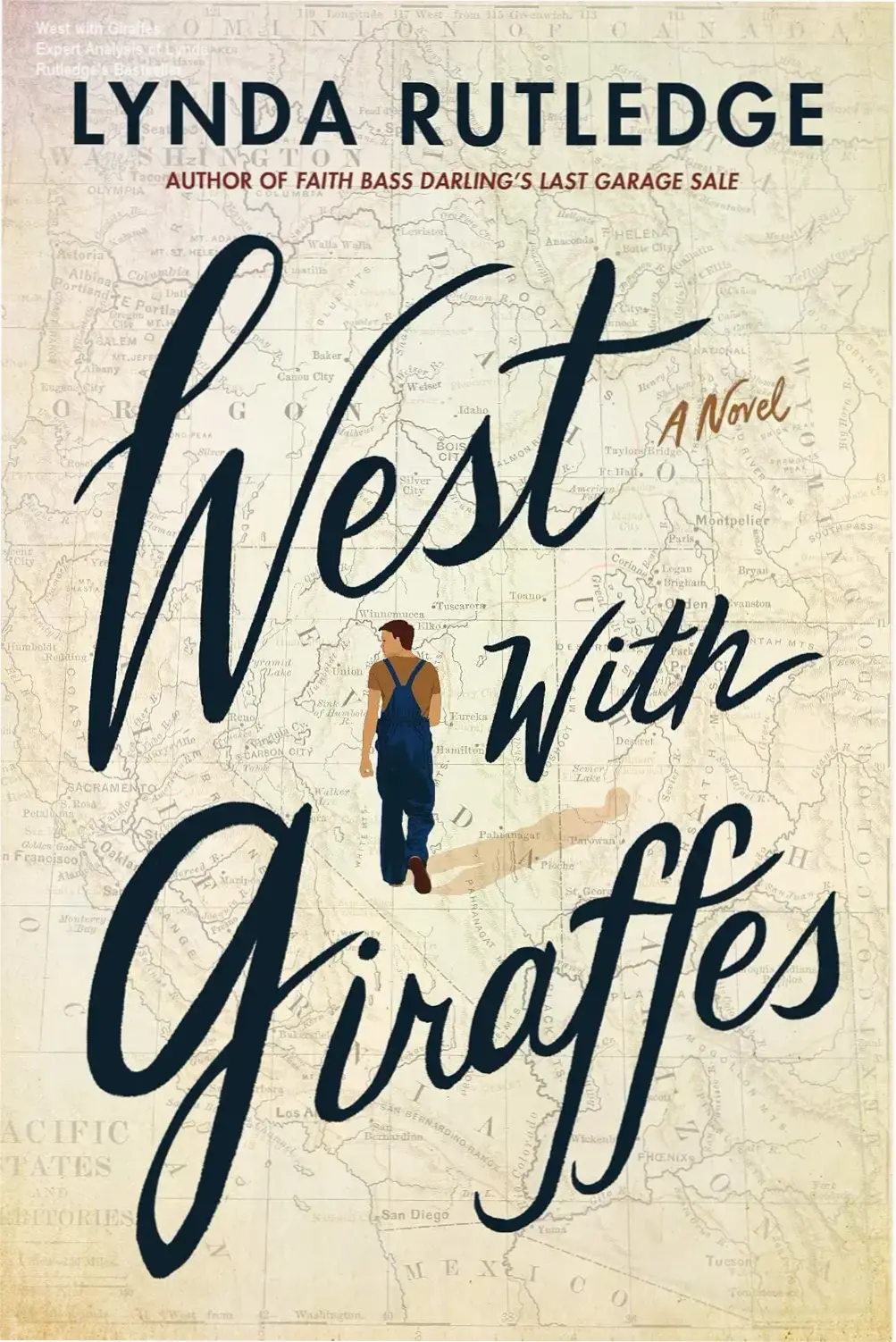
Historical fiction often struggles to balance meticulous research with a pulse-pounding narrative, frequently drowning the reader in period detail while the plot gasps for air. Lynda Rutledge sidesteps this trap entirely by anchoring a massive, improbable event—the cross-country transport of two giraffes in 1938—through the intimate, weathered voice of a 105-year-old man looking back. It is a masterclass in using a “small” witness to frame a “large” history. The novel tackles the very modern anxiety of legacy: what remains of us when the witnesses are gone? If you are hunting for a story that respects the intelligence of the reader while delivering genuine emotional wallop, this novel delivers exactly that.
The Great Depression backdrop isn’t wallpaper; it is the antagonist. Dust Bowl grit, looming war, and institutional racism aren’t themes dropped in for relevance—they are the friction the characters move against. Rutledge based this on a true story so strange it feels invented, yet she resists the urge to sensationalize. She lets the absurdity of a giraffe in a hurricane speak for itself. The result is a rare beast: a literary page-turner that book clubs and solo readers alike devour, currently sitting on a staggering 117,000+ Amazon ratings for a reason.
Ready to dive into “West with Giraffes”?
Explore available editions, check current live pricing, or download a free sample directly on Amazon.
Preview Free Sample & Check Price on Amazon
*You will be redirected to Amazon. As an Amazon Associate, we may earn from qualifying purchases.
The Dual Timeline: Memory as an Unreliable Architect
Rutledge structures the narrative around Woodrow Wilson Nickel at 105, dictating his story to a skeptical young relative. This framing device does heavy lifting. It solves the “historical hindsight” problem instantly. We know Woodrow survives. The tension shifts from *if* he survives to *how* the boy became this man.
The prose mimics the rhythm of an elderly storyteller—meandering, repetitive, occasionally sharp. Some readers on Goodreads found the opening slow, citing the nursing home scenes as a drag. They missed the point. The slowness *is* the texture of mortality. The frame allows Rutledge to contrast the visceral immediacy of 1938 (smell of giraffe dung, heat of the asphalt) with the sterile fade of 2025. It forces the reader to confront the act of storytelling itself. Who owns the story? The teller or the listener?
This technique elevates the book above standard adventure fare. It asks: does the truth matter more than the story that keeps you alive? Woodrow admits to embellishing. He admits to forgetting. That honesty builds a trust that a third-person omniscient narrator could never achieve.
Animals as Catalysts, Not Props
The giraffes—Boy and Girl—never speak. They do not have human thoughts. This restraint is the novel’s greatest strength. In lesser hands, these animals would be Disneyfied sidekicks. Here, they are forces of nature. Their biology dictates the plot. The custom truck, the route planning, the panic of a low bridge—all stem from the non-negotiable physics of a 14-foot animal.
Readers on Reddit’s r/books frequently highlight the “giraffe cam” effect: you find yourself Googling giraffe physiology mid-chapter. Rutledge did the homework. The hurricane survival at sea? Documented. The specialized feed? Real. The permits? A bureaucratic nightmare accurately portrayed. The animals’ silence amplifies the human noise around them. Woodrow projects his grief onto them. The photographer, Augusta, projects her ambition. The zoo director, Belle Benchley, projects her professional salvation.
They are mirrors. The humans project; the giraffes simply *are*. That dynamic—grace under pressure versus human chaos—is the thematic engine.
The Road Trip as Crucible: Pacing and Landscape
Twelve days. 2,000 miles. A custom truck that overheats on grades. The road trip structure provides a natural, ticking-clock architecture. Rutledge doesn’t waste a mile. Every stop introduces a new friction point: a racist sheriff, a dust storm, a mechanical failure, a moment of unexpected kindness.
The pacing is relentless but not frantic. It breathes. The “micro-paragraph” style serves the driving sequences perfectly—short, punchy sentences mimicking the vibration of the truck cab.
- Day 1-3: Chaos. Learning the cargo. The hurricane aftermath.
- Day 4-8: The Deep South / Southwest gauntlet. Social friction peaks here.
- Day 9-12: California approach. The stakes crystallize.
This structure allows for “bottle episodes”—intense character studies in motel rooms or roadside diners—before throwing the truck back onto the highway. It respects the geography. You feel the elevation change
Who This Book Is For (And Who Should Skip It)
Ideal reader: You enjoy character-driven historical fiction where the setting acts as a crucible for personal transformation. You appreciate lyrical prose that takes its time—think Water for Elephants meets The Grapes of Wrath. You want a story about redemption, aging, and the quiet bond between humans and animals, grounded in a fascinating, obscure slice of 1938 Americana.
Skip it if: You need high-stakes plot twists, fast pacing, or a strict adherence to historical record. This is a fictionalized memoir framed by a 105-year-old narrator; memory is unreliable, and the giraffes are catalysts, not co-protagonists with POV chapters. Readers expecting a zoological deep-dive or a gritty Dust Bowl survival manual will feel the narrative drift.
Common Purchasing Missteps
The biggest mismatch comes from the marketing tag “based on a true story.” The 1938 transport happened. The hurricane happened. Woodrow, the photographer, and the specific character arcs? Invented. If you buy this expecting a non-fiction account of the San Diego Zoo’s early days, you’ll resent the liberties. Conversely, if you avoid “talking animal” books, rest easy—the giraffes don’t speak. They witness.
Another trap: the Kindle formatting of the letters/journal entries. On smaller screens, the font shifts can be jarring. Grab the sample first.
Value Proposition: Hardcover vs. Kindle vs. Audio
At 346 pages, the print edition is a tactile pleasure—deckle edges, solid binding, the kind you keep. The Kindle price frequently drops below $5, making it a steal for a single sitting. The audiobook (narrated by Danny Campbell) adds a gravelly warmth to Woody’s voice that text alone struggles to capture; his Texan drawl *is* the book. If you commute, spend the credit. If you annotate margins, buy the paperback.
Contextual FAQ
- Is it a “happy” book? Bittersweet. It earns its hope through grief.
- Do I need to know history? Zero prep required. Rutledge weaves context organically.
- Trigger warnings? Animal peril (off-page mostly), period-typical racism/sexism depicted critically, child abuse backstory.
Editorial Summary
West with Giraffes succeeds because it refuses to be just a road trip novel. It’s a meditation on witnessing—what we choose to see, what we carry, and what we leave behind. The middle section drags slightly during the New Mexico stretch, and the framing device resolves a touch neatly, but the emotional payoff lands. It respects the reader’s intelligence. For the current Kindle price, it’s a low-risk, high-reward pickup. You can verify the current discount and read the latest reader sentiment here.
Final Editorial Verdict
“West with Giraffes: A Novel” delivers on its core promise for its intended audience, offering compelling insights without fluff. As highlighted in our detailed edition breakdown, its practical depth and readability are its greatest strengths.
We also recommend checking the official Kindle sample and reader ratings before making your final purchase decision.
*You will be redirected to Amazon. As an Amazon Associate, we earn from qualifying purchases.